July 17, 2026
How Does Savannah Bananas Scoring Work? Banana Ball's Win-Every-Inning System, Explained
How does Savannah Bananas scoring work? Banana Ball uses a win-every-inning point system where each inning is worth one point. Here's exactly how it works.
If you've ever watched a Savannah Bananas game and seen the scoreboard read something like 3-2 at the end of a wild, home-run-filled night, you've probably asked the obvious question: how does Savannah Bananas scoring even work? It looks like baseball, but the numbers don't add up the way you'd expect. That's because Banana Ball throws out the single biggest rule in the sport — the one where total runs decide the winner — and replaces it with something faster, weirder, and a whole lot more fun.
Here's exactly how scoring works in Banana Ball, one rule at a time.
The one big idea: win the inning, win the point
In regular baseball, every run you score piles onto one big total, and whoever has the most runs after nine innings wins. Banana Ball scraps that. Instead, each inning is its own mini-game worth exactly one point.
Whichever team scores more runs in an inning wins that inning and earns a single point on the scoreboard. It doesn't matter if you win the inning 1-0 or 8-0 — it's still worth one point, and one point only. The team with the most points at the end of the game wins.
So when you see a final score of 4-3, that's not runs. That's innings won. One team took four innings, the other took three.
How a single inning actually gets scored
Picture the top of the first. The Bananas bat and plate five runs. Then their opponent comes up in the bottom half and answers with four. In traditional baseball, that's a 5-4 lead that carries forward. In Banana Ball, the five-run half beats the four-run half, so the Bananas win the inning and take a 1-0 lead in points — and everybody starts fresh at zero runs for the next inning.
A few things fall out of this system naturally:
- A blowout inning is worth the same as a squeaker. Scoring ten runs in one frame still only banks a single point, which is why teams swing for contact and keep the pressure on every single inning rather than saving up.
- A tied inning earns nobody a point. If both teams score the same number of runs (including zero), the inning is a wash and no point is awarded.
- Momentum resets constantly. Falling behind early barely matters, because the next inning is a clean, winnable point.
This is the heartbeat of the whole game, and it's why Banana Ball feels so relentless.
The last inning is different: every run counts
There's one major exception, and it's the most dramatic part of the night. In the final inning, the point-per-inning rule goes away and every single run counts.
That means a team trailing by two points can, in theory, storm all the way back if they put up a big enough number in that last frame. It flips the strategy on its head: for eight innings you're fighting for individual points, and then suddenly the finale becomes a pure run-scoring shootout. A late grand slam that would've been "just one point" earlier in the game can swing the entire result.
Why the time limit shapes the score
Banana Ball games run on a strict clock — roughly a two-hour time limit — and no new inning can start once time expires. That rule exists to keep the show tight and fast, but it also quietly shapes the scoring.
Because the game can end on time rather than after a fixed nine innings, you never know exactly which inning will be the last one. A game might end after seven innings, or eight, depending on the pace. The players know it too, which is why that "every run counts" finale can arrive earlier than you'd think — and why the scoreboard can look calm all night and then explode at the buzzer.
The Showdown: how Banana Ball breaks a tie
What happens if both teams finish with the same number of points? Banana Ball doesn't grind through endless extra innings. It goes to a Showdown — a fast, high-tension tiebreaker.
In the Showdown, the field shrinks dramatically. Each team's half ends the instant a run scores or an out is recorded, so every pitch is do-or-die. It's part baseball, part duel, and it delivers a clean winner in minutes instead of dragging the night out. It's one of the most-loved wrinkles in the entire rulebook.
So, reading the scoreboard
Once you know the system, the scoreboard makes total sense:
- The big number each team shows is their point total — innings won, not runs.
- A game tied on points late means you might be heading for a Showdown.
- Don't panic if your team is down early; every inning is a fresh, winnable point.
If you want to watch the whole thing unfold live and see the point system in action, check out our guide on where to watch the Savannah Bananas, and plan your night around the full Banana Ball schedule.
FAQ
Are Savannah Bananas points the same as runs?
No. In Banana Ball, the number on the scoreboard is points, not runs. A team earns one point for each inning it wins, no matter how many runs it scored in that inning. Whoever has the most points at the end wins the game.
How many points can you score in one inning?
Just one. Winning an inning is worth exactly one point whether you win it 1-0 or 12-0. The only exception is the final inning, where the point rule is dropped and every run counts.
What happens in the last inning of Banana Ball?
The win-the-inning rule disappears and every run counts, turning the finale into a straight run-scoring shootout. A trailing team can mount a real comeback with one big frame, which is what makes the ending so dramatic.
How is a tie broken in Banana Ball?
With a Showdown — a rapid-fire tiebreaker where each team's turn ends the moment a run scores or an out is made. It settles the game quickly instead of dragging into long extra innings.
Why do Banana Ball games have a time limit?
To keep the entertainment fast and predictable. Games run about two hours, and no new inning can begin after time runs out. Because of that, the last inning — the one where every run counts — can arrive before the ninth.
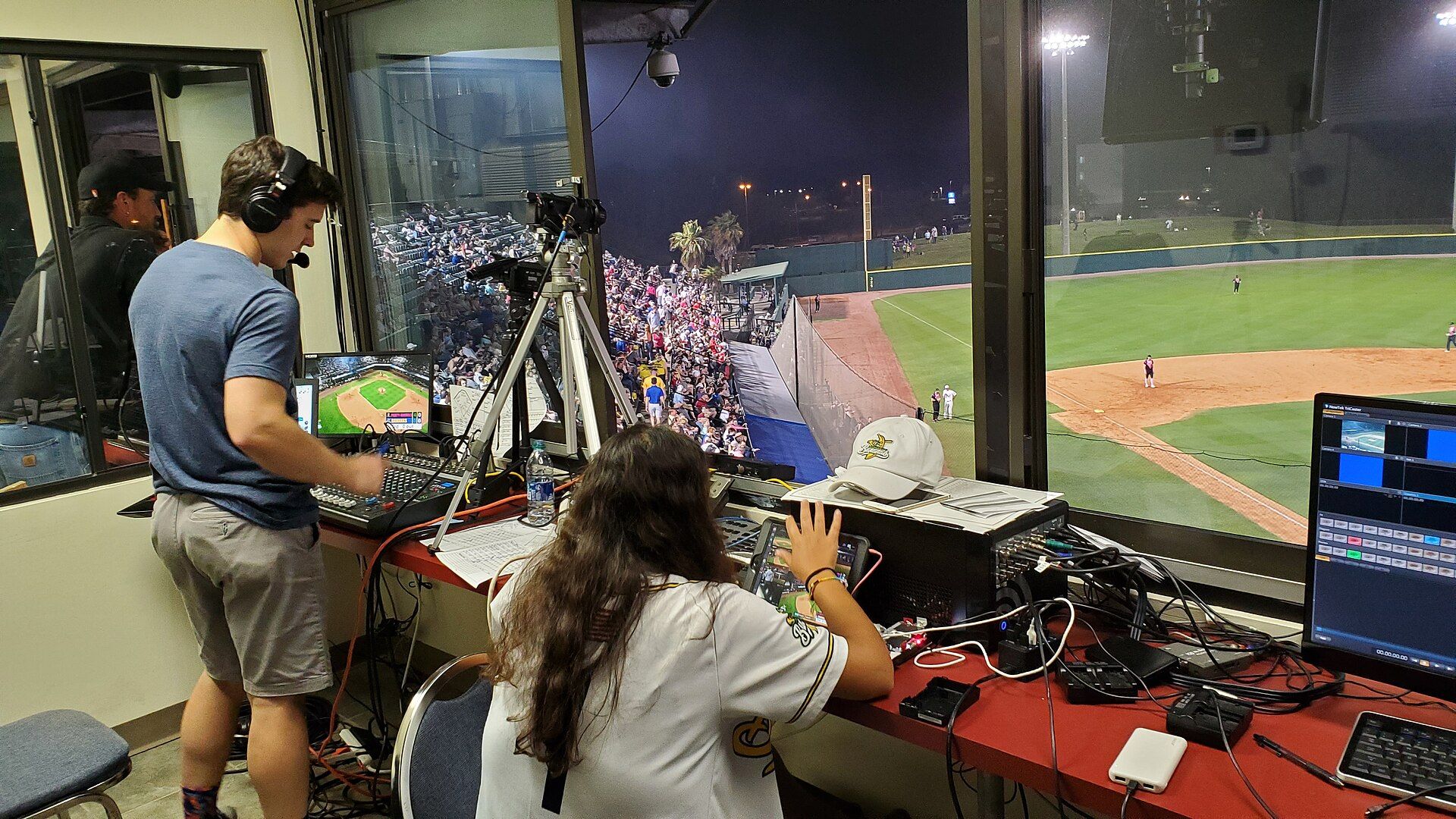
Photo: baseballmapper / Wikimedia Commons (CC0)
